Saturday, April 20, 2019

Henrietta Black 1919-2019


I want to tell you a story.
It would take one hundred years to tell the whole story.
I’ll give you the short version.
It is a story in three acts, with an epilogue.
These are my best recollections, and I’ve tried to be accurate.

ACT I
Henrietta, Mom, Grandma was born on March 25, 1919, in Harlem, to Henry and Carrie Lutz.
Her mother was the former Carrie Solomon. As descendants of a Solomon, I think this is why most of her children, grandchildren, and great-grandchildren I predict, score high on SATs.
Henrietta had an older sister, Josephine (who was a twin—the other twin was stillborn).
The two girls were raised non-religiously.
Their father was Lutheran, and their mother was Jewish.
I discovered later in life that some of the things Mom made or enjoyed or had in the house, such as potato pancakes, herring for New Year’s Eve, chocolate coins in gold wrap, or Hungarian goulash had Jewish roots.
Henrietta was very close to her father and mother.
Every night Henry would come home from work  at Karl Ehmer’s, the well-known meat supplier, and give Carrie a kiss on the neck.
Carrie taught her how to knit, crochet, tat, and bake, but she has said many times that she never really learned how to cook until she got married because her mother did all the cooking.
We still have a blanket that mother and daughter made together—Carrie crocheted the squares, Henrietta sewed the squares together into the blanket. I might have that backwards.
Henry was also an amateur brewmeister during Prohibition, like many other Americans, with a setup under the kitchen sink, brewing just enough for the fellows in his pinochle game.
As a young girl she used to sit in as a fourth when the game was short one hand.
The family of four moved from Harlem to Chelsea in Manhattan and then to Chauncey Street in Brooklyn. That’s where Jackie Gleason placed Ralph Kramden’s apartment, which he also said was in Bensonhurst, which we know isn’t true.
She was afraid of the water and even got a doctor’s note excusing her from swim class in public school.
Speech class also terrified her, which makes her later accomplishments in Act III all the more remarkable.
Henrietta remembered seeing the first talking picture, THE JAZZ SINGER with Al Jolson. Before that, she lived across the street from an outdoor movie house where you could see silent movies on the big screen from her apartment window.
Her New York City public school education was excellent.
She knew a lot of Shakespeare.
She was a member of the Arista Honor Society.
Only a few years ago, we were discussing some disastrous national event, and I said, quoting a line from JULIUS CAESAR, “The evil that men do . . . .”
Without missing a beat, she finished the quote, “. . .  [the evil that men do] lives after them. The good is interred with their bones.”
I thought, this is pretty good for a 97-year-old.
Mom said that during the depression, City College had layoffs; some instructors went to teach high school, and one of her own teachers wasn’t called “Mister”—he was called “Professor.”
This was in Richmond Hill High School, for which she had to take a special test to gain admittance.
She took the commercial sequence and became an excellent typist—whenever you mentioned someone’s typing speed in words per minute, she always said you had to deduct words for each mistake.
Another graduate of that school was Yankee 2nd baseman [BB1] Phil Rizzuto, whom Mom met many years later at a grand opening of The Wiz electronics store.
When she told the Scooter that they were in Richmond Hill High School at the same time, he said something gentlemanly like, “That can’t be!”
Some time later she wrote to him and asked if he would send an autographed picture to family friend Father Lewkiewicz.
Which Father Lewk did.
Mom loved the New York baseball Giants. 
She was the only Giant fan in an office full of Brooklyn Dodger fans. (We’ll hear more about her office job in Act II.)
She was a big fan of the great Giant pitcher Carl Hubbell.
She wrote to him in his retirement in Scottsdale, Arizona, when she heard he wasn’t feeling well. He wrote back, thanking her for writing and remembering him, and sent a nice autographed post card.
She and her mother would go to the Polo Grounds, and pay the Ladies Day admission of fifty cents and then upgrade to box seats.
Their box seats were in the same section as New York high society, such as the Vanderbilts.
This was many years before luxury boxes.
As she entered her senior year of high school in 1936, the Great Depression was in full swing.
Even with good marks and skill as a typist, there were no jobs to be found after high school. and that takes us to . . .

ACT II
The 1930s. No jobs. What to do? Henrietta enrolled in night school to learn how to operate the comptometer—a mechanical calculator with a 9 x 9 grid of keys numbered 1 to 9, up and down, and across, and a row of little zero keys at the bottom, on which you could add, subtract, and even multiply and divide! Some claim that it was faster than an electronic calculator as you could press multiple keys at the same time.
Armed with a certificate of completion of studies, she found a summer job as a comptometer operator at Domino Sugar in Williamsburg.
The summer gig led to full-time employment that fall.
She said the job was like being a junior accountant.
She used to tell me that that if she hadn’t gotten married and had children, she might have ended up as a vice president of Domino Sugar.
Every time I see a bag of Domino, I think of Mom.
Brigid and her wife Mattie named their cat Domino in her honor.
She finally ended up leading a two-woman department with Henrietta in charge of an assistant.
Accuracy was important, with each column of figures was counted twice.
1939, the country slowly crawling out of the Depression. She saw a live stage show before a screening of THE WIZARD OF OZ, featuring the stars of the movie (minus Judy Garland).
World War II came and dragged on, and everyone in the office had to go down to the sugar refinery and warehouse to get a pass for working on the East River docks.
The women received a lot of catcalls when they reported to the warehouse for their passes—it was rare for a woman to be in the warehouse.
Henrietta knitted watch caps for the sailors in the Pacific theatre—Macy’s gave the wool away for free.
She also donated so much blood for the War effort as she became a member of the Gallon Club, that she became anemic.
And that’s how she helped win the war.
(Many years later she also donated blood to her grandson, Robert, who was having a heart operation.)
She bought hundreds of dollars of US War Bonds and cashed them in when my two brothers and I were kids—opening three accounts at $300 each, five percent interest (this was the late Fifties/early Sixties).
She remembered lights-out air raid drills in the office (and some giggling in the darkened office).
She loved theatre, and she and I saw many musical shows together in later years.
I was amazed when she talked about seeing the original OKLAHOMA on Broadway in the 1940s  (like seeing HAMILTON today); she saw THE BOYS OF SYRACUSE with Ray Bolger; she even went down to Greenwich Village and saw a nightclub revue featuring men in drag.
Her favorite singer was still Nelson Eddy (she used to do her high school homework while listening to his radio program). Her favorite actor? Jimmy Stewart—she liked people of the highest morals.
The war ended.
She had made a few good friends from the office; one was named Mary.
Mary’s father died, and Henrietta went to the wake, where she was introduced to Mary’s brother.
The brother was a handsome Irish widower with jet black hair and a great wit, who came to America on a boat in 1922, when he was almost 13 years old, on a ship with his mother and siblings; his father had come over first, made some money, and “sent for them” as it used to be said.
She didn’t date much up to that point.
She went out several times with the chief engineer from the Domino Sugar warehouse, a man named Arthur.
Nothing serious developed—she said there was no chemistry.
Eventually her fiend Mary asked Henrietta if she was still going out with Arthur—“No,” said Henrietta.
Time passed, Mary got engaged to Arthur, and Mary and Arthur set the date.
Henrietta had an acquaintance at the office—she said they weren’t really friends—who insisted on going out with her to buy a dress to wear at Mary’s wedding.
It turned out to be a nice black dress, very contrarian for a wedding reception.
Henrietta met Mary’s brother for the second time at the wedding.
Mary’s brother, Thomas Black, was smitten—after dancing with her several times at the reception, he asked her for her phone number, to which she replied, “It’s in the book.”
Their first date soon followed, and it lasted all day.
Other dates followed—including the race track at Elderts Lane on the Brooklyn/Queens border and a long day at the beach.
After the beach she got a terrible sunburn and scandalized the older ladies in the office when she wore a sundress to work.
They were in love and got engaged.
Henrietta was raised non-religiously, as I said earlier.
She converted to Catholicism to marry Tom.
The night before the wedding Tom showed up at her door at 11 p.m. with a bag of shrimp.
It was a Friday night, June 19, 1953 (Catholics couldn’t eat fish on Friday, and you had to fast from midnight to receive Holy Communion.)
The next day, June 20th, they got married; the reception was held at the back room of the Welcome Inn in Glendale.
She recalled many of Dad’s family taking her up to the bar in the front for a drink.
The not-so-young couple (in 1953 on the day of the wedding he was 42, she was 34) started their life together, moving a few times from Cypress Hills to Woodhaven and finally back to Cypress Hills. Along the way they had four children. That’s Act III.

ACT III
Mom said, and I quote, “If men could have all the babies, there would be one child in each family.”
Nine-and-a-half months after they got married, Mom had her first child, Brendan, on April 2, 1954. She celebrated her first Mother’s Day, she used to say, before her first wedding anniversary.
She had her second child, Dennis, on September 24, 1955—the day President Eisenhower had the first of seven heart attacks.
I was born on March 25, 1957, on Mom’s 38th birthday.
People would ask if I felt bad that I had to share a cake with my mother—I didn’t: it made me feel special.
And then one day in church, Mom saw another mother with a baby girl and said a prayer that she would some day have a girl.
Her only daughter, Marianne, was born in a blizzard on December 12, 1960. They had to climb over a curbside snow bank to get home with the baby basket in single-digit weather, over 15 inches of snow.
Mom said many times that we should pronounce the first part of her name as “Marry” as in marriage, and not Mary Ann.
Mom used to sing to her the calypso song made famous by Harry Belafonte: All day, all night, Marianne / Down by the seaside sifting sand / All the little children love Marianne / Down by the seaside sifting sand.
Mom told her three little boys that they couldn’t run around the house in their underwear or get dressed on the couch anymore now that we have a little girl in the house. I remember looking up at the baby basket on the kitchen table when they came home and said, “Is that all you got from the hospital?”
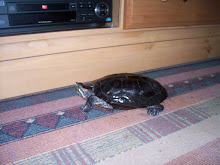
Mom was almost 42 with four kids under seven years old; Dad was 50—they more than made up for a late start; Mom called herself “Myrtle the fertile turtle.”
We settled in on Pine St. in Cypress Hills, moving at one point from 101 Pine to finally 97 Pine St. in the middle of the block.
One of old neighbors still lives there, Gary Louer of 96 Pine St.
She kept a beautiful garden in the backyard, including roses, hibiscus, Rose of Sharon, and silver dollar plants, and a beautiful grass lawn. (My father kept a mulch garden in the back.)
There were even wild peas in the backyard, and one of the next-door neighbors, one of the Canadian Ryan boys, would come through the fence and eat peas right out of the pod.
In the backyard of our old house at 101 Pine St. there was a rhubarb patch; one year Mom asked the new owners, the Brundas, if she could get some of the old rhubarb to make rhubarb pie.
Sounds like Mayberry.
There was a tree in front of our house on Pine St.
The tree was dying, and Henrietta called the Parks Department and asked for advice.
This was a block full of lush maple trees, and a blight was running through some of the trees that summer in the city.
The Parks Department advised her to water the tree every day and add fertilizer.
If you do a Google Street View of Pine St. today you will find there is one tree left standing on the block—it is that tree in front of our old house.
For Dad’s birthday, Mom was making a leopard print robe for Dad on the Singer sewing machine.
I remember her feverishly hiding it away when he came home early one day.
She made customized designer birthday cakes for the children, including a hockey rink and football field for Dennis and a cake with a radio tower made of toothpicks for Brendan. Marianne asked her to make the rainbow cake with Jell-o, Brendan also like Boston cream pie.
She was creative. I used to play canasta when I was very young, with Mom and Aunt Audrey, but my hands were too small to hold the 15 cards in the opening deal. So Mom made a card rack from two wooden slats of a set of old Venetian blinds.
She handpainted a white sign with red lettering, which was in the garden in the backyard, and each kid had their own name over their section.
“Your father wanted children,” she told me—Tom’s first wife had died after twelve years of marriage in the 1930s and ’40s: there were no children.
When my mother told me that my father always wanted children, I had proof that we were wanted and loved.
Mom called our father’s friends, “The Jolly Boys”—Dad liked showing off the kids and invited his pals to see us running around.
The Jolly Boys visited Dad when he was sick in bed with phlebitis for a week.
His boss, Mr. Sacco, waited at the bottom of the stoop, and Mom waved him to come in too.
She read us bedtime stories about “Wopsie,” the young guardian angel who was always getting into trouble himself and helping children with their problems.
In the 1960s there was a King Tut craze, and I would ask Mom, “Make me a mummy,” and she would tuck in the blanket around me, neck-to-toe.
She was so upset when Barry Goldwater lost in 1964 that she wrote him a condolence letter.
She used to be a substitute teacher if one of the teachers at Blessed Sacrament School called in sick.
Henrietta was the first female lector at Blessed Sacrament Church.
One day after Mass an older female parishioner came up to her and said it was so good to see her up there (there had been some resistance from the old male guard).
Henrietta was the accidental president of the Rosary Society—she had been the secretary. The president resigned, and the vice president turned down the job.
She was the publisher and editor of the Rosette, the newsletter of the Rosary Society, writing a monthly message to the members, and she created Word Search puzzles that greatly impressed the pastor, Father O’Connor.
This was the same era when Gerald Ford became the accidental President of the United States.
She entered a contest in one of her crossword puzzle books—this was during an election year, and the object was to place the names of the states on a blank grid, counting the electoral votes of each state as your points.
She finished high in the contest and won a bar magnifier as the prize: it was exciting to see her name in print in the book as one of the winners.
She switched to mail order crosswords when she had to stop going to the candy store—she was shocked by the other printed material that the store was starting to sell in the 1970s.
She was offered the job of cook at the parish rectory, which she turned down.
In all the years we went to grade school, only once did we not eat lunch at home; that single day, we ate at Mrs. Weimer’s, a friend of the family.
Every other school day for eight years we ate at home and watched Jeopardy! on Channel 4 at noon, heading back to school at 12:30.
Some of my friends who didn’t get along with their own mothers liked my mother and developed a nice relationship thru visits and correspondence.
The four Black children grew up, got married, and had children.
She has 11 grandchildren and 5 great-grandchildren.
The many hours, days, and nights that she spent with Margie and me helping us take care of the newborn twins, Matt and Tom, and little Brigid, were the happiest days of my life.
She was 70 years old in 1989 when the twins were born.
She said that helping us with the kids kept her young.
Margie called her Mary Poppins.
Margie and I, and our children, were lucky enough to see the real Henrietta in everyday life.
Everyone in the family got a cupcake with their initial on it for Christmas at her place. She might have taken awhile to warm up to new people, but when a new member of the family joined us by way of marriage, this was her way of saying, “Welcome to the family.”

Epilogue
I remember her scrubbing the linoleum under the washing machine on the day Mom, Dad, and Marianne moved from Pine St. to Bensonhurst (upstairs from Brendan) trying to get a spot out of the floor where the new family would probably put their own machine.
She spent more years on her own after Dad died in 1985 than she spent with Dad.
Marianne helped her all those years after 1985 with unwavering devotion.
After our father died, Mom kept busy in creating things: 400 cookies every December for family and friends; Christmas tree ornaments; Mom knitted booties for the mothers, and blankets for the babies, for a place in Coney Island called Rachel’s Joy that cares for single mothers.
One of the last two things my father said to me was, “Take care of your mother.”
The other thing he said was, in talking about Mom, “She was good with the children.”
I was lucky enough to be in the right place at the right time to help out in the last few years.
When Marianne and I nursed Mom back to health from one of several pneumonia scares, a Russian nurse named Yevgeniy Bashmashnikov said to me, “You and your sister have done a good job.” It was the greatest thing I ever heard.
I would say to her on the phone or in person at Maria Regina Residence “I love you Ma.” She would sing in reply, from GUYS AND DOLLS, “I love you, a bushel and a peck.” She used to sing that when were little, going to bed.
At the party for her 100th birthday, the birthday cake had three candles: a one, a zero, and another zero. I was afraid Mom might not have enough breath to blow out the three candles at the same time, so I borrowed an idea from Sen. Mitt Romney and picked up the candles one at a time. She blew out the zero, then the other zero, then the one.
Goodnight Ma. We know that you are with God now. Now, you belong to the ages.

Mom’s 98th birthday in 2017.

 [BB1]My brother Dennis fact-checked this as I took a pause later. Rizzuto played shortstop.

Friday, February 17, 2017

Farewell IMdB Message Board

IMdB is shutting down their message boards this month. Here is one of my posts, in response to someone who thinks the phrase "men of color" is anachronistically agenda driven as it appears in a PBS period piece, MERCY STREET.

Re: "Men of Color"? Really?

You nearly turned if off, but some spark of curiosity kept you watching. Follow this link from the late, great William Safire of the NY Times in 1988 and see if this information changes your opinion on the use of the phrase.

http://www.nytimes.com/1988/11/20/magazine/on-language-people-of-color.html

Did you know when you see a play written by Shakespeare that he was not transcribing history? That is how to appreciate historical drama or fiction. Even if you right about this being anachronistic, we don't reject JULIUS CAESAR because we heard the clock strike three (the mechanical clock had not been invented yet). The Bard was not carrying out some clock-maker's secret agenda.

A lot of your anger seems to be against women, with liberals on the side. I wonder how many of the last 100 books you've read for leisure were written by or about women?

Your comment reminds of a line from the song by Steve Martin, GRANDMOTHER'S SONG:
Criticize things you don't know about.

Turn off Limbaugh and Hannity for a month and see your life get happier.

Re: "Men of Color"? Really?

^ best possible response!

I refuse to engage in a battle of wits with an unarmed person.


Saturday, December 3, 2016

Sharon Jones

Tuesday, September 13, 2016

Why Bother? Why I Bother.

We had the grand opening of our renovated co-op Rec Room last night. Got up early this morning and voted in the primary for Persaud for State Senate. Went out to get a corporation tax doc notarized for my co-op, mailed it. Went to work on my business.

People today are more disengaged than ever. Through force of will I'm involved in a lot of things, but I wasn't always like that. My involvement in the co-op board is my bowling league. I meet and know a lot more people than if I was home every night watching Netflix.

Go out and do something! Put down your phones and talk to somebody!


Tuesday, March 1, 2016

Windows 10: Dead Start and Search Buttons--Fixed!


One day, my Windows 10 Start and Search buttons died. This fixed it. I posted at http://home.bt.com/tech-gadgets/computing/has-your-windows-10-start-menu-stopped-working-here-are-four-ways-to-fix-it-11364000314532#disqus_threadthread

Right-click desktop. Go to Personalize/Start (5th item). Click Start Full Screen/On.

Restart . . .

Right-click desktop. Go to Personalize/Start (5th item). Click Start Full Screen/Off.

Start and Search icons both restored.

The only odd thing I've done lately is let my son copy a DVD because his Mac has no drive. He used his old Windows logon, for the first time since I upgraded to Windows 10. I wonder if that is related to this problem in some way or just coincidence. I also had a problem with the icons locking into place to the left. There is solution for that too.

This worked just fine! Thank you so much!!

Friday, February 26, 2016

Heartland v. Big Town

The true narrative of a city is less existentially threatening and more life-affirming than the soul-sucking ennui of a dry, flat Footloose state that drives people to leave for the excitement and anomie of Big Town, wherever she lies.


Tuesday, August 25, 2015

Long-Range Reading and Viewing Projects

1920 by Eric Burns

This was an entertaining and informative chapter-a-day read for lunch, not bogged down in overanalysis, of the historical and cultural highpoints of the eponymous year. The author speaks authoritatively based on strong primary sources and admits where he speculates. I had one factual quibble with p. 69, referring to the rough blizzard of March 1920 and the effect of high winds: “Pedestrians in New York were blown off balance as they walked, even though the canyon walls of skyscrapers should have protected them.” I would suggest that this is not exceptional, as high winds from above are drawn down any building. The wind has to go somewhere and doesn’t only bounce back on itself. There is less volume of space for wind to blow at street level, and the result in a compressed, higher-velocity wind stream than the wind from above.  This phenomenon was also observed in Brooklyn by my mother-in-law, Rose Dunne, who called the Williamsburg Bank corner at Flatbush and Fourth Avenues,” the windiest corner in Brooklyn.”

Doctor Who: The Classic Series


How to approach the desire to see all the episodes of Doctor Who, 1963–1989? Plan A: watch them backwards in time, Doctors Eight through One. Before the return of the Paul McGann Eighth Doctor’s 1996 single television adventure, rescreened for the 50th Anniversary celebrations on BBC America in 2013, I was able to find the one free copy of this DVD in New York City, at the Seward Park branch of the NYPL. I saw all of the Sylvester McCoy Seventh Doctor’s (1987–1989) adventures courtesy of the NYPL 42nd St. branch, often watching a few shows in one sitting. Their Dr. Who collection is extensive. Then I switched to Plan B: watch them in order. I started at the beginning (1963) with William Hartnell’s First Doctor. I can’t explain why, after I had dipped into his Doctor several times, I didn’t get it. But somehow something clicked by watching episode 1, “An Unearthly Child.” Maybe it was my own advancing years and to learn that he was my age when he played the part (although chronic health problems made him look 15 years older). I’m in the middle of the final series that featured the original two companions, Ian and Barbara, and I will miss them dearly. I now watch one episode per week, on Saturdays, and it will take the next 20 years or to see them all at that pace, allowing time off in the Fall to watch the new series. I’ll be 78. I’m only 50 years behind, in 1965.

The 87th Precinct Novels by Ed McBain


If you take advantage of it, the Kindle Lending Library is one of the world’s greatest bargains, as found in Amazon Prime. (Note: I know they treat employees roughly, according to a recent piece in the NYT.) Included in the package is one free book per month on the Kindle (you can also read on a PC). The selection of Kindle freebies does not align with my taste, but I have found some great Kindle Singles, including short fiction (Crooning by Frank D. Gilroy [he resurrects the great Dick Powell in a humorous tale of 1958 Cuba]) and on subjects as varied as WW II espionage (The Secret Agent by Stephen Talty) and comical memoirs (Cautionary Tales by Stephen Tobolowsky); and one great series: Ed McBain’s 87th Precinct novels. For 50 years McBain (a.k.a. Evan Hunter) wrote these this punchy, moody accounts of tough detectives, low-life crooks, and beautiful dolls; denizens of Isola (a NYC-like city turned sideways) inhabit a universe where series regulars can die but justice always prevails; he delineates fleshy characters that lift this series up from dime novel to gilt-edged classic. I can’t wait until the first of the month (you get one free book per month) to read Lady, Lady I Did It (1961). There’s a new series on TNT this month about ‘60s cops and I’ll be watching to see if there is any 87th influence. McBain said he was ripped off by NBC when they did Hill Street Blues, a fact he alludes to in the intro to the reissue of some of the novels. TV’s Barney Miller owes a debt to him too. I am tempted to order the TV series DVD of the 87th Precinct, which lasted only one season in 1961–62, starring Robert Lansing. It beats watching a 2015 doctor show with underwear models pretending to be brain surgeons.


Holman Christian Standard Bible by multiple authors


Skipped the Old Testament, working on the New Testament. Read a chapter a day (takes less than 10 minutes), stop, let it marinate. You can read the first four books in less than a year. I just started the fifth book, “Acts of the Apostles.” Try this reading plan and if it doesn’t improve your life in some way, at least you’ll improve your cultural literacy and maybe win at bar trivia. My father said to my old girlfriend (now my bride): forget those shrinks, there is something good for you on any page of the Bible. He was right. My favorite book is John. Halfway in he starts up with the events of the Passion, which the other books seem to squeeze in at the end. I especially enjoy the miracles, many of which have come true again today through science, which doesn’t make them any less miraculous. Gift of tongues = Google Translate. Curing paralysis = electrical stimulation of the spinal cord (in development). Curing the deaf = cochlear implant.  It’s a roadmap to the possible for those afflicted, if not by illness then by apathy and depression. In John 9:3, referring to the blind man’s affliction and cure, Jesus says, “this happened so that the works of God might be displayed in him.” I’m praying for a miracle cure for tinnitus and floaters.
Go out there, help somebody, feel good about yourself! My father, who I only knew as an older Irishman in his 50s to 70s (that’s like 60s to 80s today) and never in great health, had an even older Irish friend, Barney Brady, and he’d go over and help him out. “Where’s Dad?” we’d ask.  “He went to see Mr. Brady,” said my mother.

The Hornblower Novels by C.S . Forester


After I finished the 20-volume O’Brian Aubrey/Maturin series some 15 years ago, where to go? It’s like when your bar goes out of business. Do you go to the artisanal cheesemaker/gastropub that took its place, or do you find an even older bar? In reading the first Hornblower novel, Beat to Quarters, and finding the captain too dour, I then got into his psychological struggles with self-loathing, while admiring his bravery and calculating acumen in sailing and adventure planning. I’m now in the second book, Ship of the Line, and will no doubt keep far from leeward as I set topsails to the eleventh book across the horizon. I’m buying the print version to easily share with Mom. I made a decision to read the books in the order written, not in the chronological numbering order that the current publisher has chosen, in order to experience the works in the same order as the first readers. Belay that rope!

Ann Patchett

I have read five Ann Patchett novels and admire her work for its heart (without mawkishness): The Patron Saint of Liars, Taft, The Magician's Assistant, Bel Canto, and State of Wonder. She was crazy enough to open her own bookstore in Nashville after the big chains left town. As I understand it, the big chains lost money as chains, but there were certain cities where they made money (like Amtrak in the Northeast vs. the less-used Northern-Western lines). I’m still trying to figure out why you titled Taft as you did.
I read State of Wonder first, and then I believe, TMA, BC, TPSoL, and most recently, Taft. I hope her essay collection, This is the Story of a Happy Marriage, stays true. Bravo Ann!

Friday, July 5, 2013

The Fifth of July: There Used to be a Boardwalk Right Here

THE FIFTH OF JULY: I saw the Lanford Wilson play with Christopher Reeve in the early '80s. He played a paraplegic homosexual (apologies in advance, that was the word for "gay" back then--you couldn't say "gay" in the NY Times unless it meant otherwise). I probably paid the same as I paid this week to see MAN OF STEEL in Union Square ($14.50). MoS took away the stink that's been in my nose since SUPERMAN RETURNS. What won me over was the Burger King commercial. In 2 seconds of commercial screen time I could see in that pitch for the Whopper that the actor was actually an actor and not a model turned deadbeat-dad superhero. The Whopper by the way has breached $5 in Manhattan. The sign said "$4.99" on Fifth in the mid-30s but they charged $5.09. I asked for 11 cents back. As I left, I saw the new signage being delivered.

On this July 5 I took a trip to Rockaway Park to see how B116 St. weathered the storm. The Sandbar at B116 St. hasn't come back and the wooden boardwalk is gone all the way to B106. A concrete boardwalk is under construction. It was a shock to see new modern elevated bathrooms planted in the sand, the elevation being a good idea if there is another storm of the century. The locals have objected to the view being partially cut off. I observed that the old below-ground bathrooms at B116 have a few inches of green muck pooled at the bottom of the staircase leading to them.

To get from B116 to B106 you can walk along a metal-plank road plunked in the sand parallel to the shore. When you get to B106 you see another modern bathroom and the 21st c. version of The Sandbar: the Caracas Arepas Bar. I got there around 12:30 pm, a little too early for food, and killed the time with a tasty Rockaway (of Long Island City) beer. After Kindling some pix to world famous webmaster Kevin Walsh and a few of my other associates, I returned for a delicious chicken empanada and another brew. It felt like Park Slope by the shore.

Destruction and things falling apart are bad but what makes us America is growth and renewal. No flies on U.S. Would I like to see a dozen places like Caracas in 3 blocks of Rockaway? No, but its heroic return in 2013 after the storm is inspiring to anyone who likes a knosh and a drink on a sunny uncrowded day at the shore.

Postscript: I can recommend the carrot cake and coffee at the Last Stop Gourmet Shop, located next to the A train. Right outside was a blood drive to support a cop shot yesterday. You can't discourage Rockaway. Like the David Brenner gag about the New Yorker who sees the manhole cover explode into the air and yells, "Tails!" Rockaway goes on and will be better than before.

Photos of the Fifth of July, 2013, Rockaway Park, NY.

The old Sandbar.

Bathrooms in the sky.

 The long plank road of metal.

There used to be a boardwalk right here (apologies to Sinatra).

And here.

The future is now at B106.

Still getting the hang of these selfies.

There we go.

One last selfie. So long from Caracas, Rockaway. These folks make you forget that we're supposed to mad at them for selling cheap oil to seniors. Like the Texan said, what's all of their sand doin' on my oil?

Monday, June 3, 2013

The Next Doctor in Doctor Who

I regret not registering my Sarah Palin for veep prediction years ago so here goes:

The next Time Lord will be . . . a Time Lady: Hayley Atwell. She has sci-fi and real cred in spades, is a terrific actress, and not incidentally, is a beauty.

Let's see what happens.

Sunday, April 28, 2013

The Parody is Better Than the Show

The classic example is the Milton Berle song parody "Sam You Made the Pants Too Long" exceeding the popularity of "Lord You Made the Night Too Long." A modern one is the Nikki Heat series by Richard Castle. I stopped watching CASTLE after trying to get into it last season. However, the books are a great read, still unknown who is penning them. Publishing is a rare media where you can easily keep a secret.

Tuesday, April 2, 2013

Internet Scoop, or Just a Guess

Was that John Barrowman (ARROW, DOCTOR WHO) dubbing Jimmy Fallon in Jimmy's duet with Jay Leno last night? Jimmy can sing but this bit had Broadway quality. Find Barrowman's singing in the movie THE PRODUCERS doing "Springtime for Hitler" and you'll hear the similarity. Plus, he had a show in the UK with a similar theme to the Jay-Jimmy duet. Just saying. This may be the first post on the Interwebs to notice this, or just a bad guess.

Thursday, October 4, 2012

I Dreamed About Twins

I had a dream last night that I was talking to one of the boys in the E. 28th bedroom, sitting on the edge of bed. I said, Isn't that something, you're a twin and now you have twin brothers. Where are they?, I said in a panic. In the corner, opposite the window, I found two tiny babies up on a shelf in what looked like shoe boxes.


In the book I'm reading, CUTTING FOR STONE, the twins are placed in their crib apart, but by morning they are in a V-formation, touching at the head. That's how they were in the womb, slightly conjoined at the head but then separated immediately at birth. I remember our boys in the T-formation in the morning.

The dream must have come from my remark in the kitchen last night about being the son of a twin and father of twins.

Thursday, September 20, 2012

There's Nothing Worse than the Wino

My daughter received a voucher in the mail the other day for $100 worth of wine. She usually runs an amazing offer past me to see if it's a scam. I thought back to my father, who would be 102 years old today. The conversation, from the early 1980s, had turned to the Bowery. This was before you needed to pass a rope line to get in. Denizens included defrocked priests, broke lawyers, crooked accountants, shell-shocked vets, and working class joes and janes who lost the battle with the bottle years before. My father said, "There's nothing worse than the wino." I said, "Dad, haven't you heard about this crack cocaine epidemic? It's killing people every day and ruining lives." "Yes," said the old Irishman, "there's nothing worse than the wino." The crack epidemic subsided.  I wonder where the winos went?

Wednesday, September 12, 2012

To the AMNY Hawker on the Herald Sq. Subway Mezzanine

To the lady who gives out the free morning paper:
When you hawk a paper, you're supposed to entice us with what "it" is: "Read All About It!: HUN SINKS LUSITANIA or "Read All About It!: SADDAM FOUND IN SPIDER HOLE,  not "Read All About It!: AM New York!"

Monday, September 10, 2012

Good News from the Barber

If a haircut were a speech, then the peroration would be the mirror ritual. Late Sunday morning, my barber angled the mirror in his hands so I could see in the big wall mirror the handiwork of the last 15 minutes. As the light from the spot at the top of my head reached my retina, I also reflected, on the time I was sitting on the floor playing with my kids as they were eye-level to me. Matt said, "Daddy, you have a spot!" I had known this but went into foolish denial. My wife later acknowledged the fact. In fact, she recently expressed the opinion that had thought by this time (some 20 years later) that I would have lost it all. I said to my barber, "Well, I still have that spot back there." He said, "Don't worry, that's from the summer. It'll grow back in the winter." Punked by my own barber. I tipped 20% for the laugh.

Sunday, September 9, 2012

WKRB--Sweet Sounds of Hal David

It's only blowing out 10 watts and heard in Bk and the Rockaways, but there were some big sounds coming out of WKRB 90.3 FM on Sweet Sounds tribute to the late Hal David. I think Jonathan Schwartz managed a single tune in salute to Hal David last weekend on WNYC-FM, but Prof. Ron Forman put together a terrific hour, including my personal favorites, "What's New Pussycat" sung by Tom Jones and "Living Together" from the much maligned musical version LOST HORIZON. Thank you professor. I live nearby so I can dial the show up from across Sheepshead Bay. If you live out of the coverage area you can also tune in from the Internet via this link.

Saturday, September 8, 2012

I Saved a Life Today

A tornado touched down in Breezy Point, Queens and Canarsie today. We also had some strong winds in Gerritsen Creek. After the storm, my wife and went out for a walk in the creek and spied a bluefish flopping in the trail. It must have been lifted out of the water by the winds. Rather than call Nanny Bloomberg and 311 to find out what to do when discovering wildlife out of its proper environment, I picked the fish up by the tail and tossed it some distance into the water. I say some "some distance" because due to so-called restoration, the water is fenced off. I seem to recall that the same restoration line was used for Prospect Park, which is now a tree museum. We lived in Park Slope when there was just three of us and I can remember walking down to the stream, a little bit of nature only a few blocks away from our third-floor walk up. Now, you can look at the stream through a chain link fence. You think these fences are temporary and after 10-20 years, you realize that it isn't so. Each time they "restore" Gerritsen Creek, it is claimed that it is being restored to its natural original state. I'm not sure which fixed point in time they use to simulate that antediluvian condition.

Thursday, August 30, 2012

I Can't Win--Caught Cheating While Asleep

My wife woke up upset today. It seems that international movie star Julie Delpy asked me out and didn't ask my wife to come along. I explained to Mrs. 1OTT that I couldn't be held accountable for something that happened in her dream. Going Jungian, I offered the theory that Ms. Delpy was an avatar for my wife, both being blonde, bespectacled, and beautiful. I think I smoothed it over and with luck it won't come up this evening.